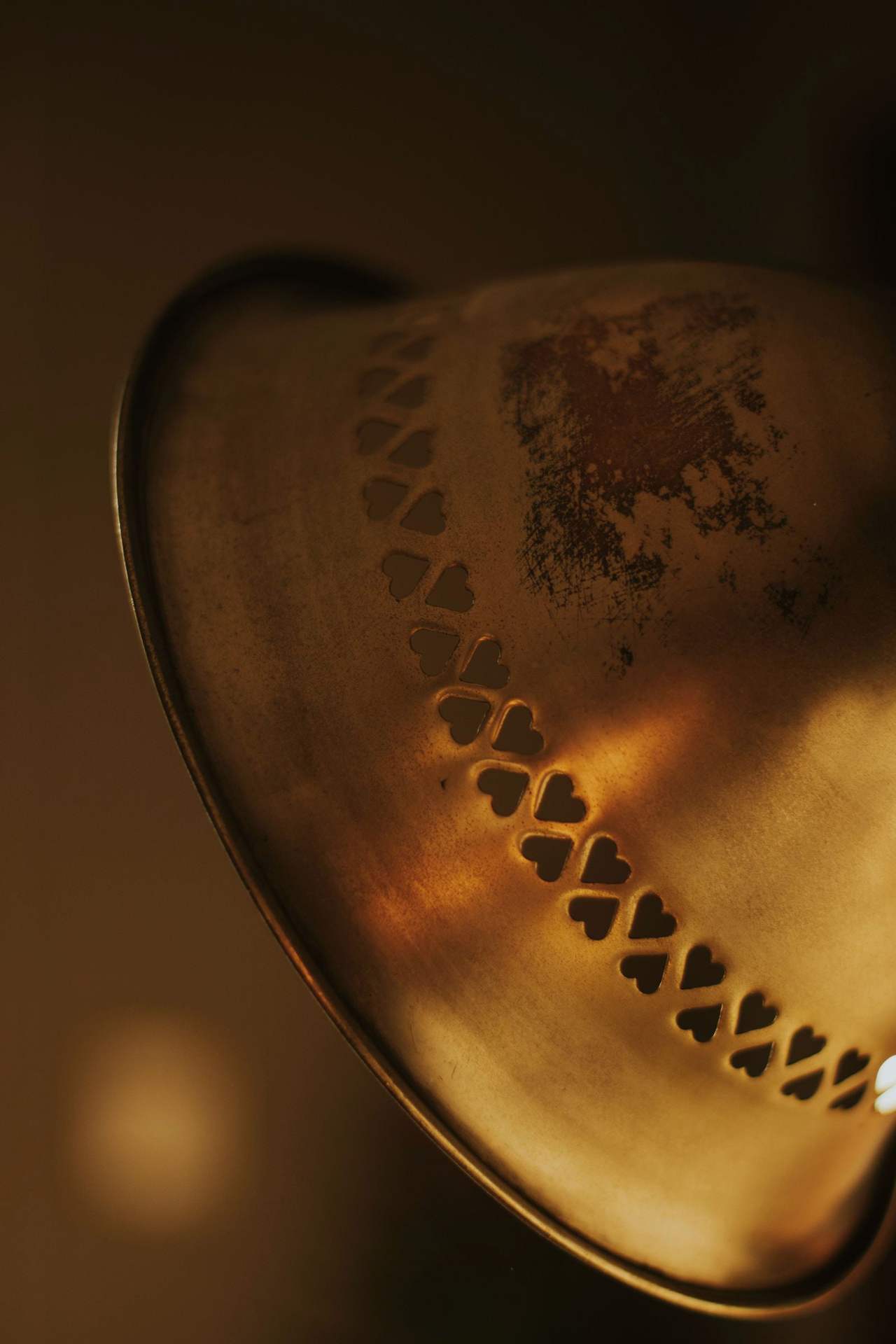
Brass: bent by hand, left to darken
Every lamp we make hangs from a brass frame bent by hand by Lâm Văn Lộc. Raw brass is left bare and darkens over the years; for a colour that stays put, choose matte black or matte white at the same price.
- Bent by
- Lâm Văn Lộc, bending brass since he was 16
- Method
- Softened with a torch, bent on a wooden jig
- Time
- About half a day per frame
- Finishes
- Raw brass, matte black, matte white (powder coated), same price
- Raw brass
- No lacquer; we never polish it back
- Warranty
- Frame and shade, 24 months
Brass is an alloy of copper and zinc, warm yellow when new, softer than steel, and it does not rust the way iron does. In a lamp the frame is the part nobody notices: it holds the shape of the shade, keeps the socket centred and carries the weight of the shade for years. Every frame we make is brass, and every one is bent by hand.
How Lộc bends a frame
Lâm Văn Lộc has been bending brass since he was 16. Cold brass rod is stiff; force it and it kinks or cracks. He softens each length with a torch, then bends it around a wooden jig cut to the shape of the shade: the rim, the crown, the struts between them and the seat for the socket. Every design and size has its own jig, so the tenth frame matches the first. One frame takes about half a day.
Once bent, the frame is joined, trued and balanced, then handed to Huỳnh Thị Mến, who weaves or lays the shade onto it. Tô Minh Khang runs the cable through, fits the E27 socket and lights the lamp for 24 hours. The number engraved under the canopy matches a ledger line with the name of the person who bent the frame. You can read more about Lộc on his maker page.
Brass and light
The frame gives no light of its own, but it shows up in the light. Inside an open rattan shade like Hạ Chí, the struts draw thin lines through the pattern on the wall. On Lập Thu, the rim is the only metal you see, and it catches the light as a fine ring. Raw brass picks up the warm yellow of a 2700K bulb; a black frame disappears into shadow; a white one vanishes against a white ceiling.
Three finishes
- Raw brass: no lacquer. It darkens over the years, from bright yellow to a deep brown. Places your hands touch often may age differently from the rest.
- Matte black: powder coated, a colour that stays. Good for dark ceilings, darker cafés and sets of several lamps that should read as one.
- Matte white: powder coated, a colour that stays. For white ceilings, when you want to see only the shade.
All three cost the same. Choose in the configurator on each lamp in the collection.
Brass in a humid climate
Brass does not rust like iron, so Saigon’s humidity does not weaken the frame. It only means raw brass ages in its own way in each home.
- Raw brass: dust with a soft dry cloth. No cleaners, polish or sandpaper. Lộc never polishes raw brass back, and we suggest you leave it too: polish one spot and it becomes a bright patch against the rest.
- Black and white: a dry cloth, or a barely damp one for marks, dried straight after. Keep sharp objects off the coating.
- Never outdoors or in a bathroom. The shade is the reason, not the frame.
Frame and shade are covered for 24 months. If a frame bends, a joint opens or the coating peels because of our workmanship, call us; Tô Minh Khang answers. Raw brass darkening is what brass does, not a fault. See care and warranty.
Why brass changes colour, whether you can keep it bright, and when a coated frame makes more sense: Lộc covers it in his note on unlacquered brass patina.
To compare the three finishes against your own ceiling, send a photo through the light mock-up page, or book a visit to hold a new frame next to an aged one.
Lamps in this material
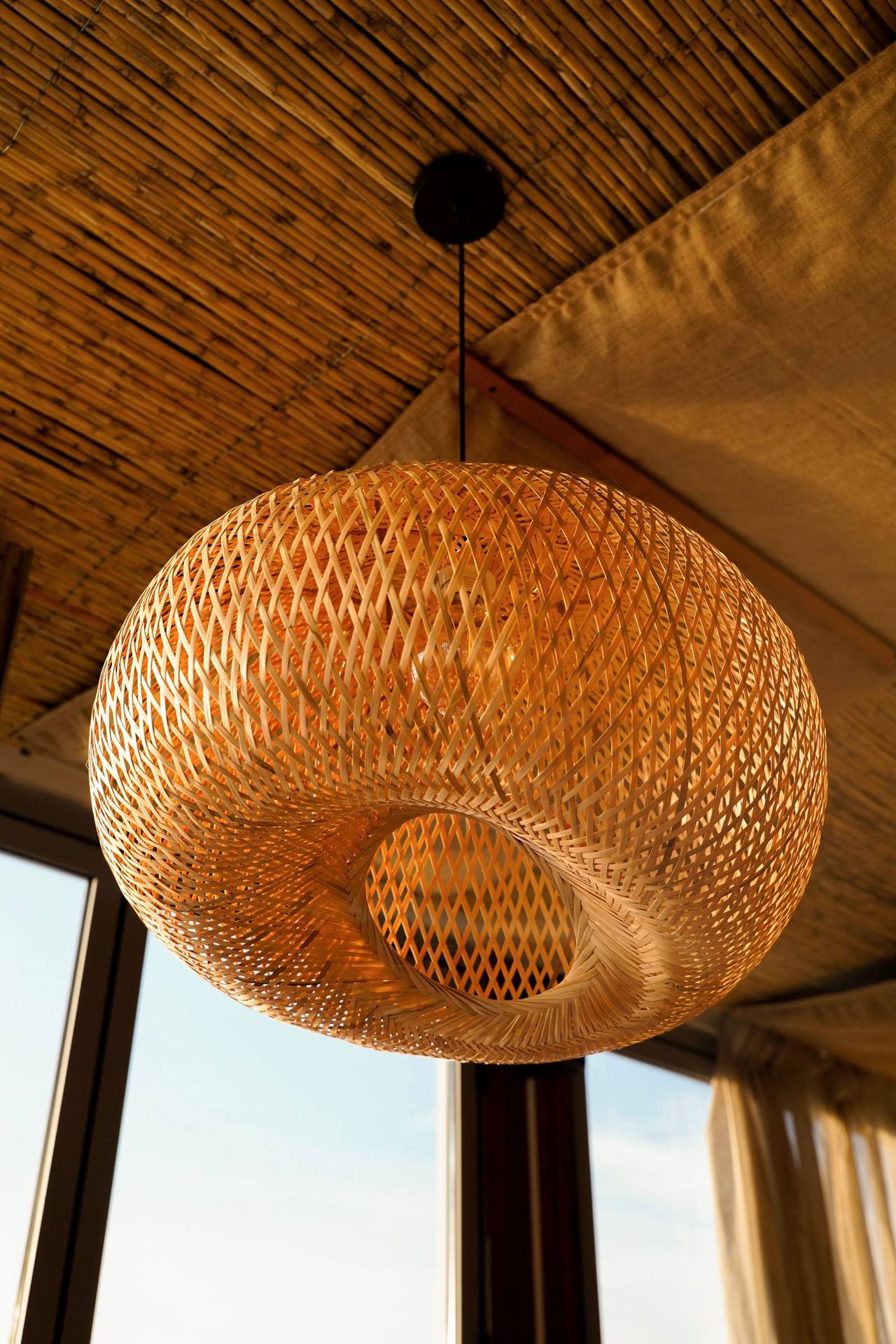
Rattan pendant · Living room, dining table for four
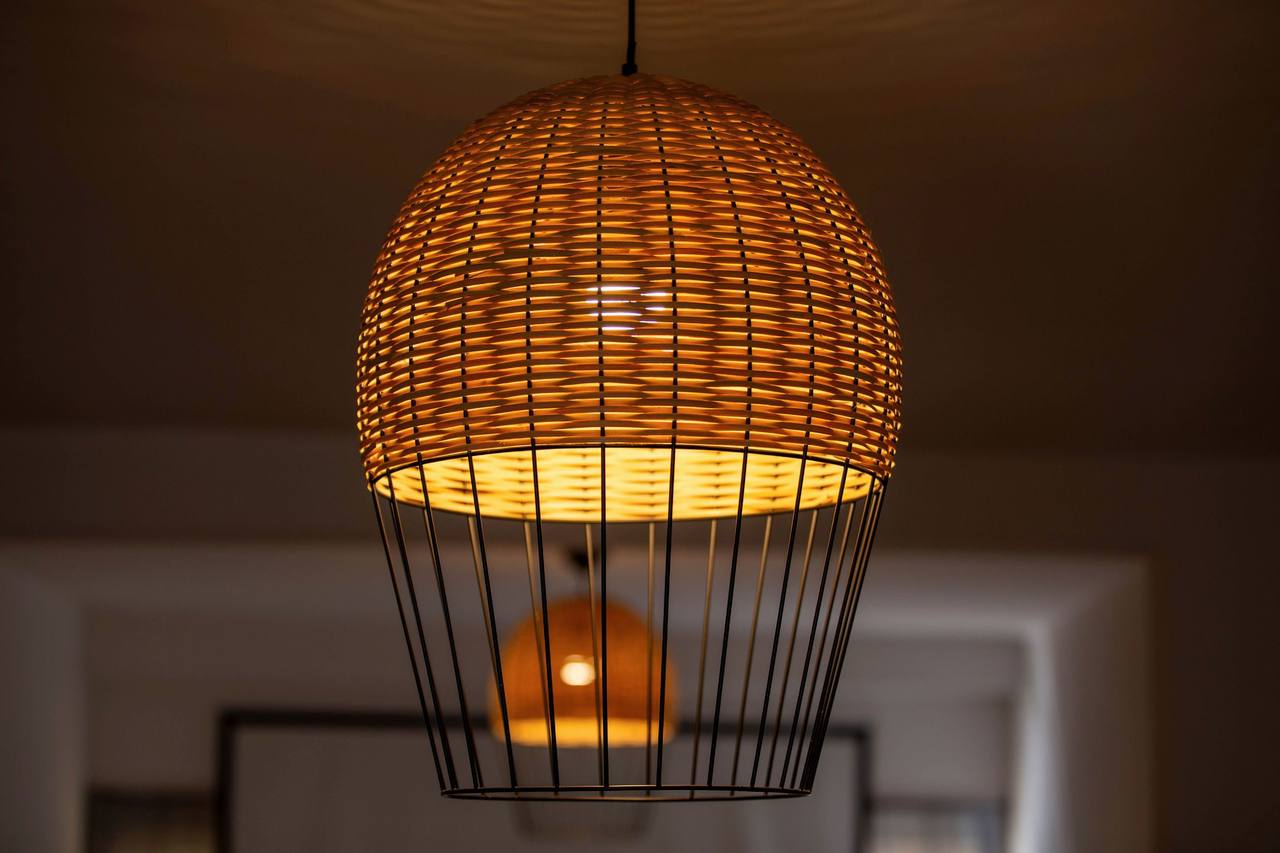
Seagrass pendant · Reading corner, small bar
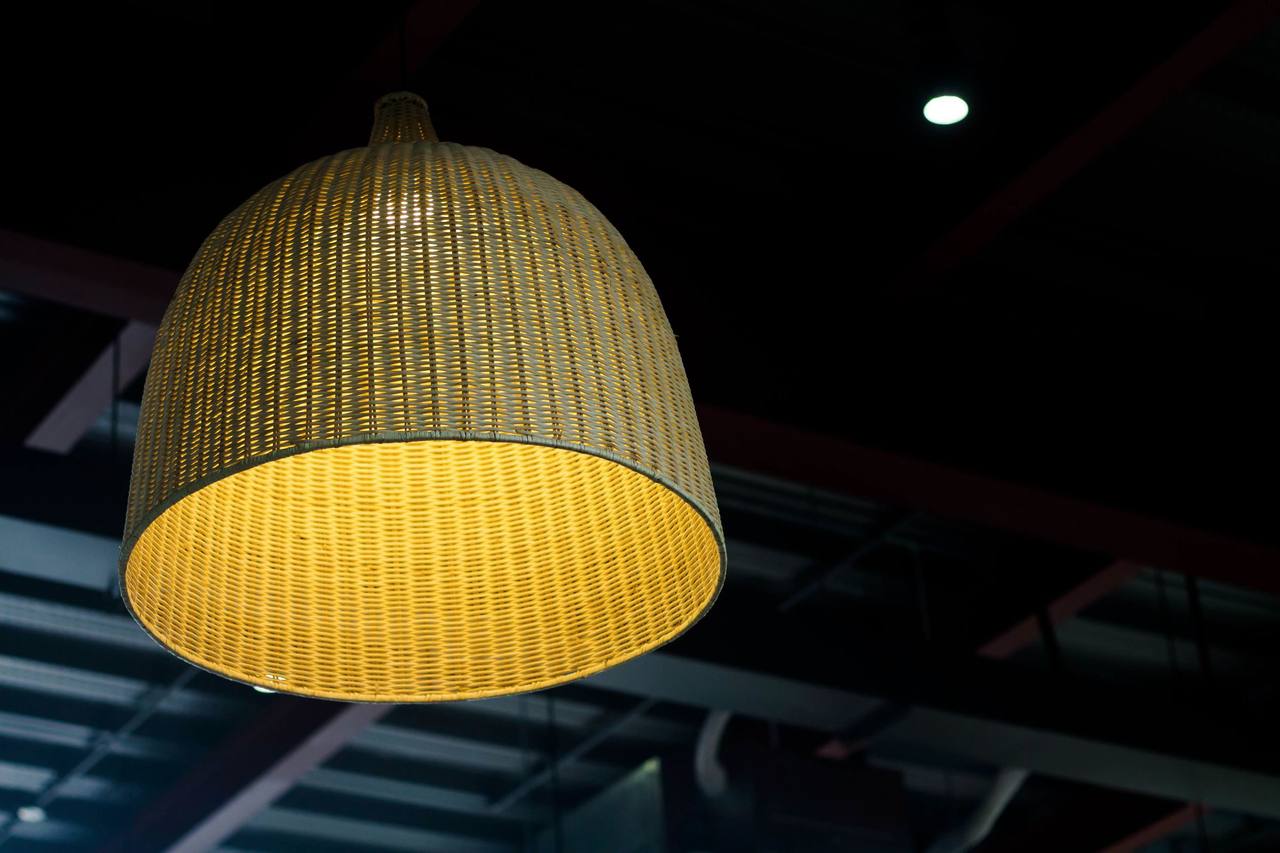
Rattan bell pendant · Corridor, bedside
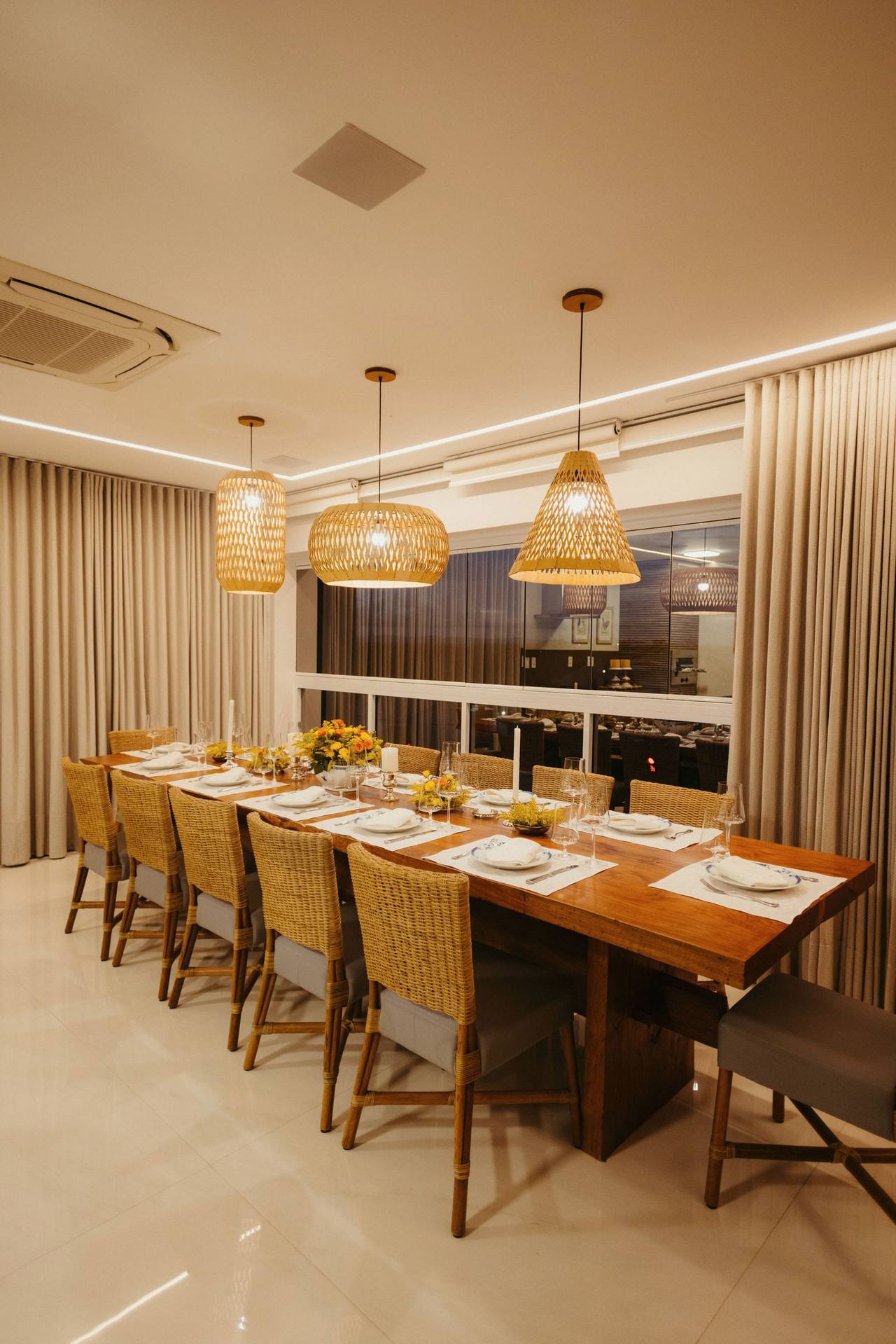
Set of four staggered pendants · Dining table for six, café entrance
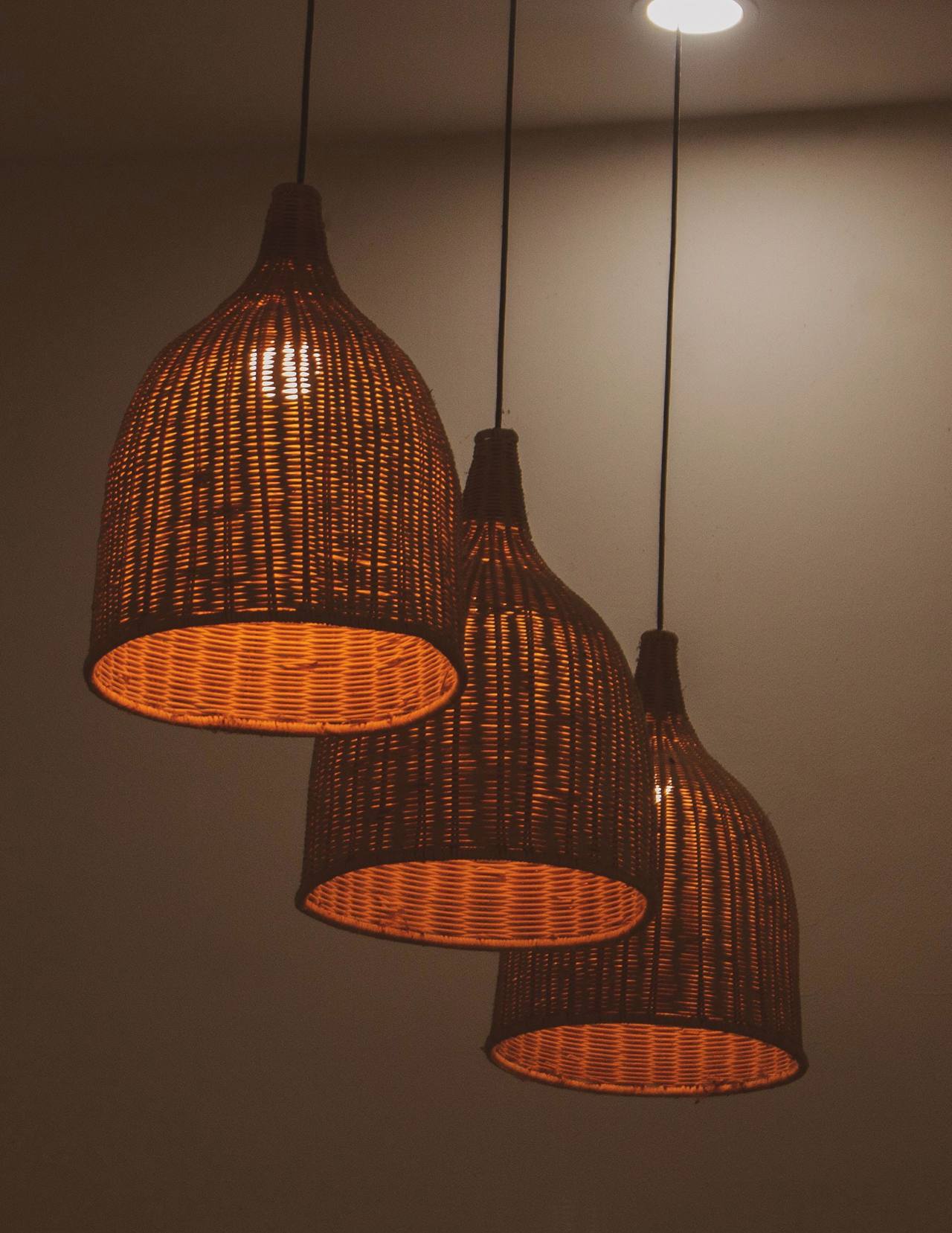
Set of three seagrass pendants · Bar counter, long desk
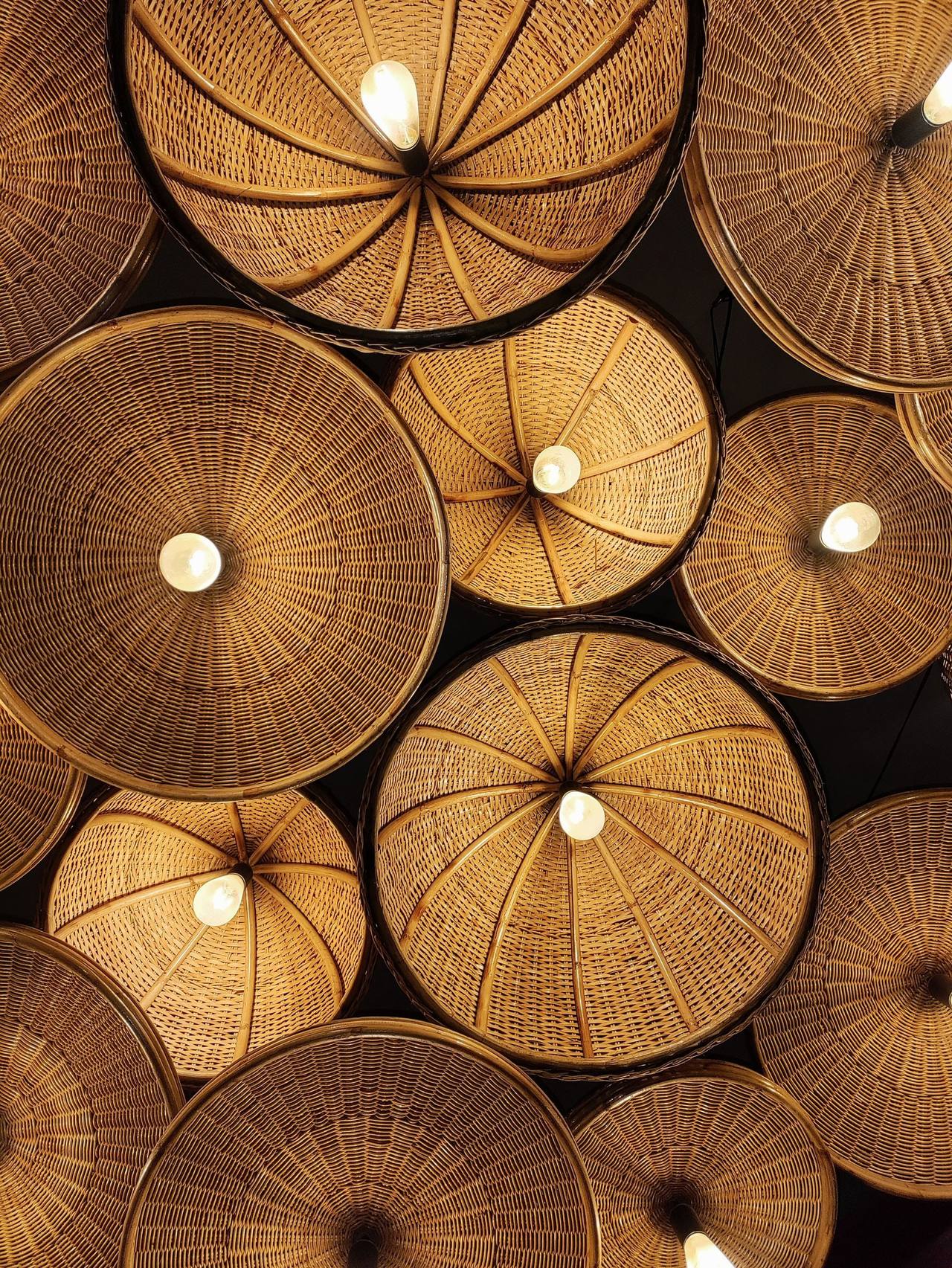
Eight lamps or more, laid out on your plan · Cafés and restaurants under 80 m², homestays