Dó paper: soft light that shows the fibres
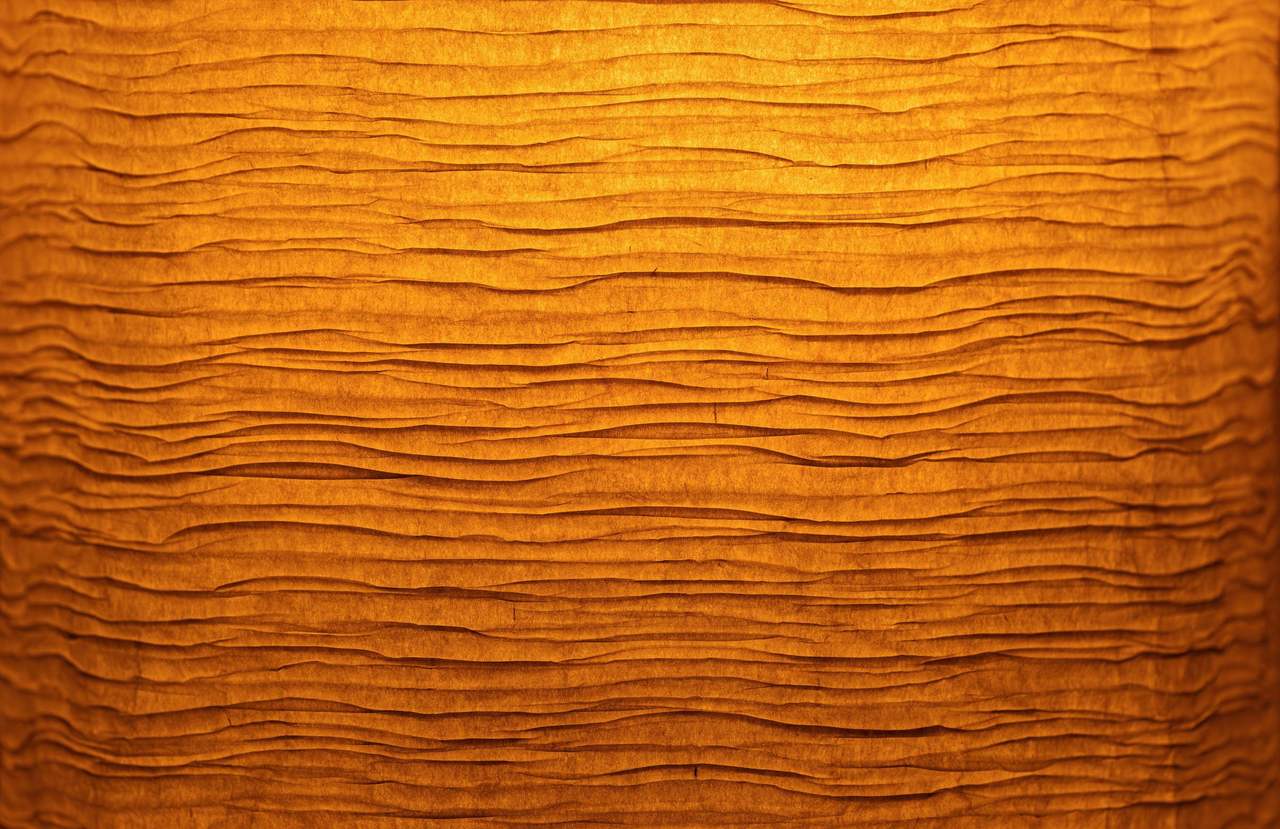
Giấy dó (dó paper, made from the bark of the dó tree) is handmade Vietnamese paper. Two layers on a brass frame turn the whole shade into one soft, even glow with the fibres showing, as long as the room is dry.
- Made from
- The bark of the dó tree, by hand
- Our shades
- Two layers laminated onto a brass frame
- Made by
- Huỳnh Thị Mến chooses the sheets and lays the shades
- Extra cost
- Lập Thu VND 400,000; Tiểu Mãn VND 300,000 per shade; Xuân Phân VND 800,000 per set
- Good for
- Air-conditioned bedrooms and reading corners
- Avoid
- Bathrooms, kitchens, bars, damp rooms
Dó paper is made by hand from the bark of the dó tree. Nhân Dân newspaper describes it as tough, durable, rarely attacked by insects and good at holding colour, and reports that the paper village of Đống Cao, in Võ Cường ward of Bắc Ninh, has made it for about 800 years. Sài Gòn Giải Phóng newspaper notes that it is soft and strong, and best known as the paper for Đông Hồ folk prints and royal decrees. We use it for one reason: light through dó paper looks like nothing else we make.
How we make a paper shade
Huỳnh Thị Mến chooses every sheet. Handmade paper is uneven: thick fibre in one place, almost translucent in another. She sets aside sheets with very thin patches, because once lit those become harsh bright spots.
A paper shade is not woven. Lâm Văn Lộc bends a brass frame exactly as for a seagrass shade, softening the rod with a torch and shaping it on a wooden jig, about half a day per frame. Mến then lays two layers of paper over it. With one layer you can see the bulb inside; with two, the bulb dissolves into the paper and only the fibres show. Tô Minh Khang wires it and runs it for 24 hours, like every lamp we make.
How light passes through
Seagrass pushes light down onto one spot. Rattan lets it out sideways in a pattern. Dó paper lights up the whole shade like a lantern: even in every direction, soft, without edges. Up close, you see long fibres running into one another.
The trade-off is that less light reaches the table than from a seagrass shade of the same size. Paper is for unwinding and reading a few pages before sleep, not for working.
Three lamps come in dó paper:
- Lập Thu: instead of seagrass, +VND 400,000. Uyên’s reading corner in the An Khánh apartment is a paper Lập Thu, VND 2,300,000 in all.
- Tiểu Mãn: +VND 300,000 per shade, VND 900,000 for the set of three.
- Xuân Phân: in place of the two linen shades, +VND 800,000 for the set.
Dó paper and Saigon’s humidity
The paper is strong, but water is its weakness. We would rather say so now:
- Hang it only in a dry room, ideally one with air-conditioning. Uyên’s bedroom has it, which is why we used paper there.
- Never in a bathroom or kitchen, over a bar, on a porch, or in a closed room without air-conditioning during the rainy season.
- Dust it with a soft feather duster. No damp cloths, no sprays.
- Keep oily fingers off. Grease soaks into the paper and shows the moment the lamp is on.
Where the air is damp, we advise against it. At Nhà Chín Phòng in Đà Lạt we chose sealed rattan instead.
Paper shades only take LED bulbs. All our lamps use an E27 LED at 2700K, the yellow-white of an old incandescent, 6 W. Replace like with like and never fit an incandescent bulb. Frame and shade are covered for 24 months; see care and warranty.
Read Mến’s note on dó paper bedside lamps, or book a visit to see a paper shade lit next to a seagrass one.
Sources (checked 4 October 2026): Nhân Dân, on the Đống Cao paper village, 10 August 2026; Sài Gòn Giải Phóng, on dó and dướng paper lamps, 1 March 2025.