Export rattan lamps and small-workshop lamps: where they differ
Export goods are made in batches to a foreign buyer's spec; a small workshop makes one lamp for one room. What to check in the weave, frame, cable and socket.
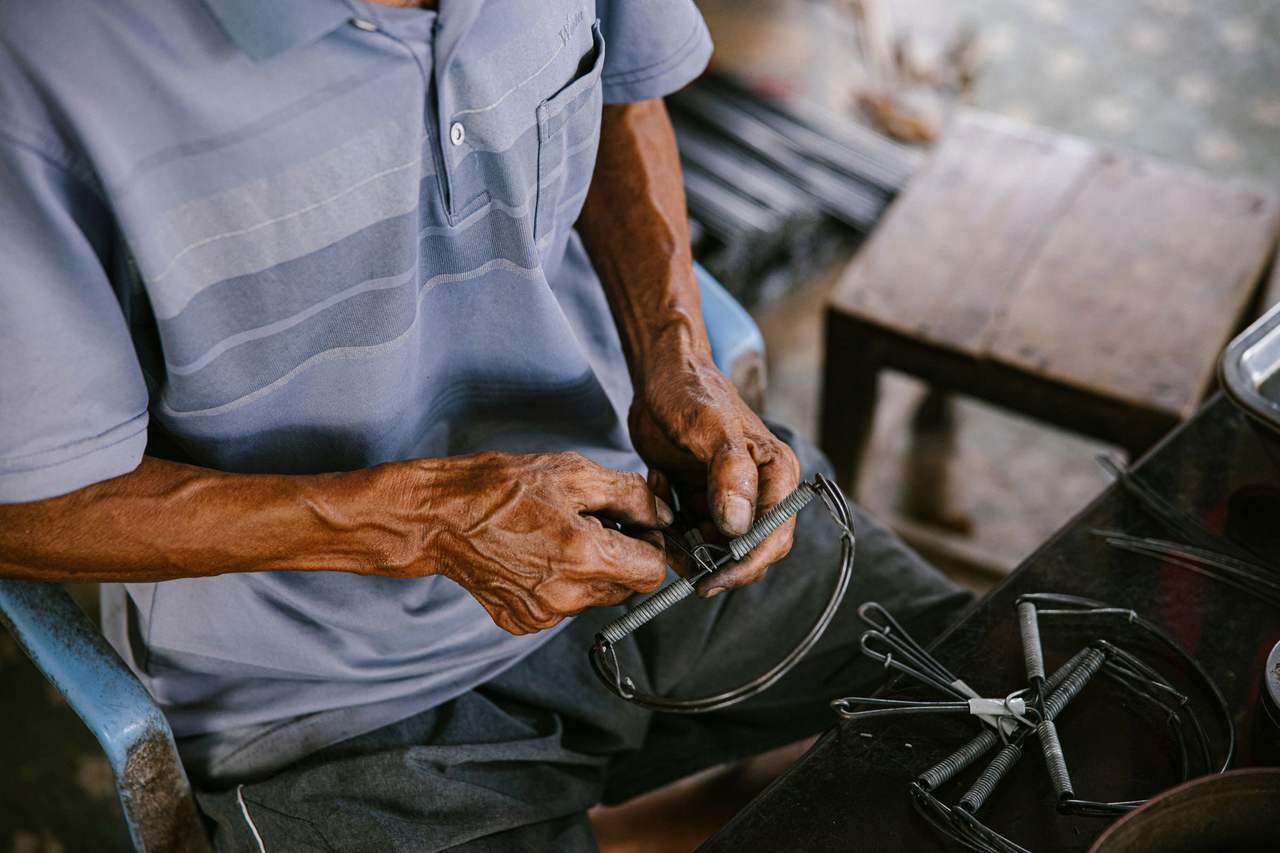
Export rattan lamps and lamps from a small workshop differ mainly in how they are made, not in the fibre. Export goods are made in large batches to the design, size and price a foreign buyer has ordered. A small workshop makes one lamp at a time for a particular room, after seeing that room. Neither is better by default. To judge whether any lamp is worth the money, wherever it comes from, look at five things: the weave, the frame, the cable, the socket, and a label saying who made it and what the warranty is.
I am Mến, and I weave the shades at our workshop in Saigon. This is not about running anyone down. It is to help you know which kind you are buying, and what to ask.
What “export” means, and how big it is
Vietnam sells a lot of rattan and bamboo abroad. According to VnBusiness in March 2020, citing the forestry administration, rattan and bamboo product exports reached USD 474 million in 2019, up 44.4% on 2018; the EU took 31.44%, the US 19.5% and Japan 9.3%. A later VnBusiness article, from September 2025 and citing customs data, reported that rattan, bamboo, seagrass and carpet products earned USD 574 million in the first eight months of 2025, up 5.4% year on year. The handicraft sector is aiming for USD 6 billion in exports by 2030.
The two figures cover different product groups (the 2025 one includes seagrass and carpets), so do not compare them directly. What they show is scale: Vietnam’s rattan trade makes goods for overseas buyers worth hundreds of millions of US dollars a year.
At home, mass-made rattan and bamboo shades are cheap. A Việt Báo article from January 2026 quotes shades from VND 90,000 each.
If you moved here from Europe, the US or Japan, those shares suggest the rattan pendant you saw in a shop back home may have been woven in Vietnam.
Made in batches, made for a room
| Batch-made (typical of export goods) | Room-made (a small workshop like ours) | |
|---|---|---|
| Who decides design and size | The buyer, for their own market | The person living in the room, after seeing a drawing |
| Quantity | Hundreds or thousands of one design | One lamp, or one set for a café |
| What is sold | Often a bare shade, or a complete lamp to the buyer’s spec | A complete lamp: shade, frame, cable, socket, bulb |
| Checked before making | One approved sample for the whole batch | A light mock-up on a photo of your room |
| Hanging height | You install it yourself | Set on site when we install |
Batch-making has clear advantages: low prices, lots of designs, stock on hand. Making for a room has different ones: the lamp fits the spot, and someone is responsible when it fails.
Five things to check on any lamp
Use this list in a shop, at a market, or when we deliver.
| Where | What to look for | Warning signs |
|---|---|---|
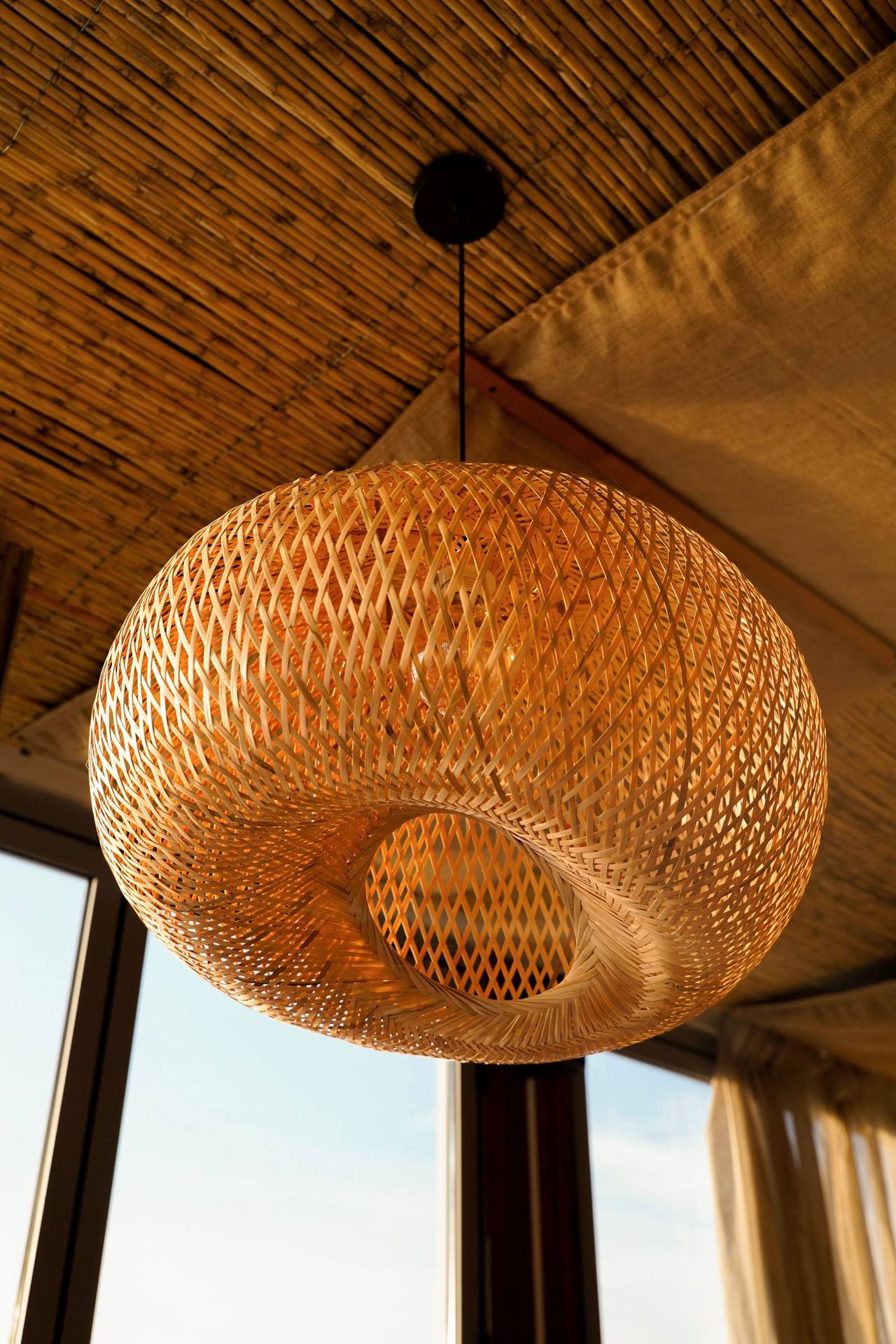
| Weave | Even strands, ends tucked inside, tight rows | Ends sticking out, gaps that are not part of the design |
| Frame | What is it: brass, painted steel, or no frame | Bare steel at the welds (rusts in damp air), a shade that dents when held |
| Cable | Supple sheath, a cable grip at the canopy, long enough for your ceiling | Joints taped together, no grip, cable too short |
| Socket | E27, the common screw-in type; bulbs in any shop | An unusual socket with hard-to-find bulbs |
| Label | Who made it, how long the warranty is, who to call | Nothing at all |
If the lamp you like was made for a foreign market and is being resold here, also check that the plug and socket suit Vietnamese outlets and bulbs.
How we make ours
There are four of us and we make about thirty lamps a month, no more. I weave every shade on a wooden mould so the shades in a set match. A 45 cm shade for Hạ Chí (Summer Solstice) takes me two days. Lộc bends the brass frames on jigs, about half a day each. Khang wires them, fits the E27 socket and leaves every lamp lit for 24 hours before packing.
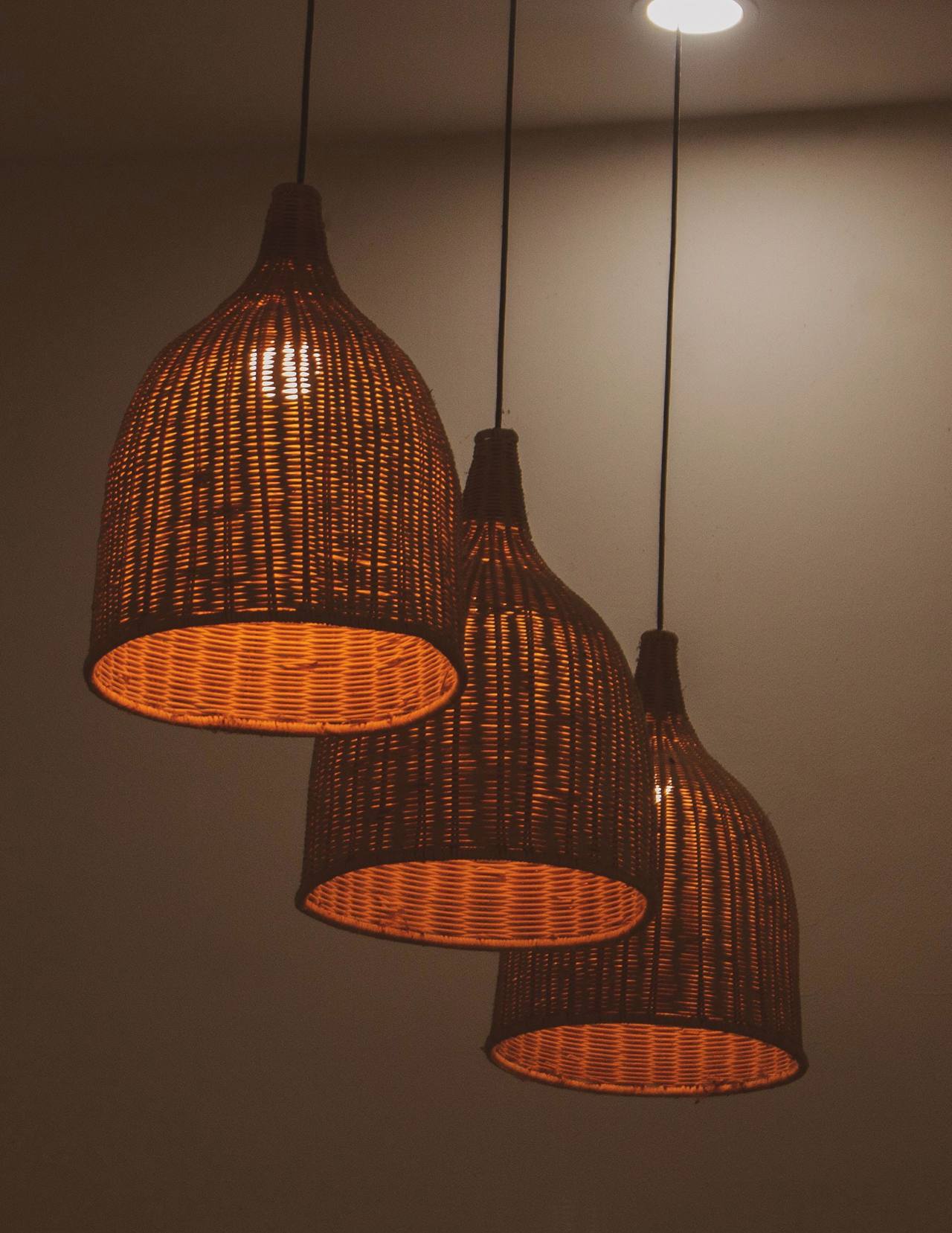
Each lamp is numbered under the canopy. Our ledger records that number with the names of whoever bent the frame, wove the shade and wired it. Frame and shade are covered for 24 months. A standard Hạ Chí is VND 2,900,000 and a Tiểu Mãn (Grain Buds) set of three is VND 3,600,000, both before VAT. That covers the brass frame, shade, cable, socket, a bulb and a spare, and free delivery and installation in Ho Chi Minh City.
Where people compare wrongly
- Comparing a bare shade with a complete lamp. A VND 90,000 shade and a VND 2,900,000 lamp are different things. Add a frame, cable, socket, bulb, installation and warranty before comparing.
- Assuming “export quality” means better, or worse. The word tells you where goods go, not how good the lamp in front of you is. Check the five things above.
- Choosing from a product photo on white. What you live with is the light through the shade in a dark room. Switch it on, or ask the seller for a photo with it lit.
- Not asking who fixes it. A ceiling lamp hangs for years. Ask about the warranty and who to call before you buy.
Our pillar guide, rattan pendant lights: what to look for and how to keep them, covers how to recognise a hand-woven shade; the rattan materials page has close-ups of the weave; and the workshop page walks through the five steps from a room photo to a lit lamp. To handle a shade and look at the weave yourself, book a visit. To see a lamp in your own room first, send a photo through the light mock-up page; the first drawing is free and comes back within 48 hours.
Sources and update
2019 rattan and bamboo exports of USD 474 million, up 44.4%, with the EU at 31.44%, the US 19.5% and Japan 9.3%: VnBusiness, 10 March 2020, citing the forestry administration. USD 574 million for rattan, bamboo, seagrass and carpets in the first eight months of 2025, up 5.4%, and the USD 6 billion target for 2030: VnBusiness, 16 September 2025, citing customs and the industry associations. Shades from VND 90,000: Việt Báo, 30 January 2026. The batch versus room comparison and the five checks are our own experience. Last checked 4 October 2026.
Sources checked
Lamps in this article
Read next
- Materials
Rattan pendant lights: what to look for and how to keep them
How to tell a carefully woven shade, how rattan, seagrass and bamboo differ, damp-proofing, cleaning, and why a rattan lamp does not belong in a bathroom.
- Materials
Rattan, seagrass or bamboo: three fibres, three kinds of light
Rattan bends and can be woven open, so light escapes sideways. Seagrass weaves tight and sends light down. Bamboo is stiff and suits geometric shades.
- Materials
Raw brass darkens over the years, and that is normal
Why uncoated brass lamp frames change colour, whether you can keep them bright, and when a matte black or white frame makes more sense.