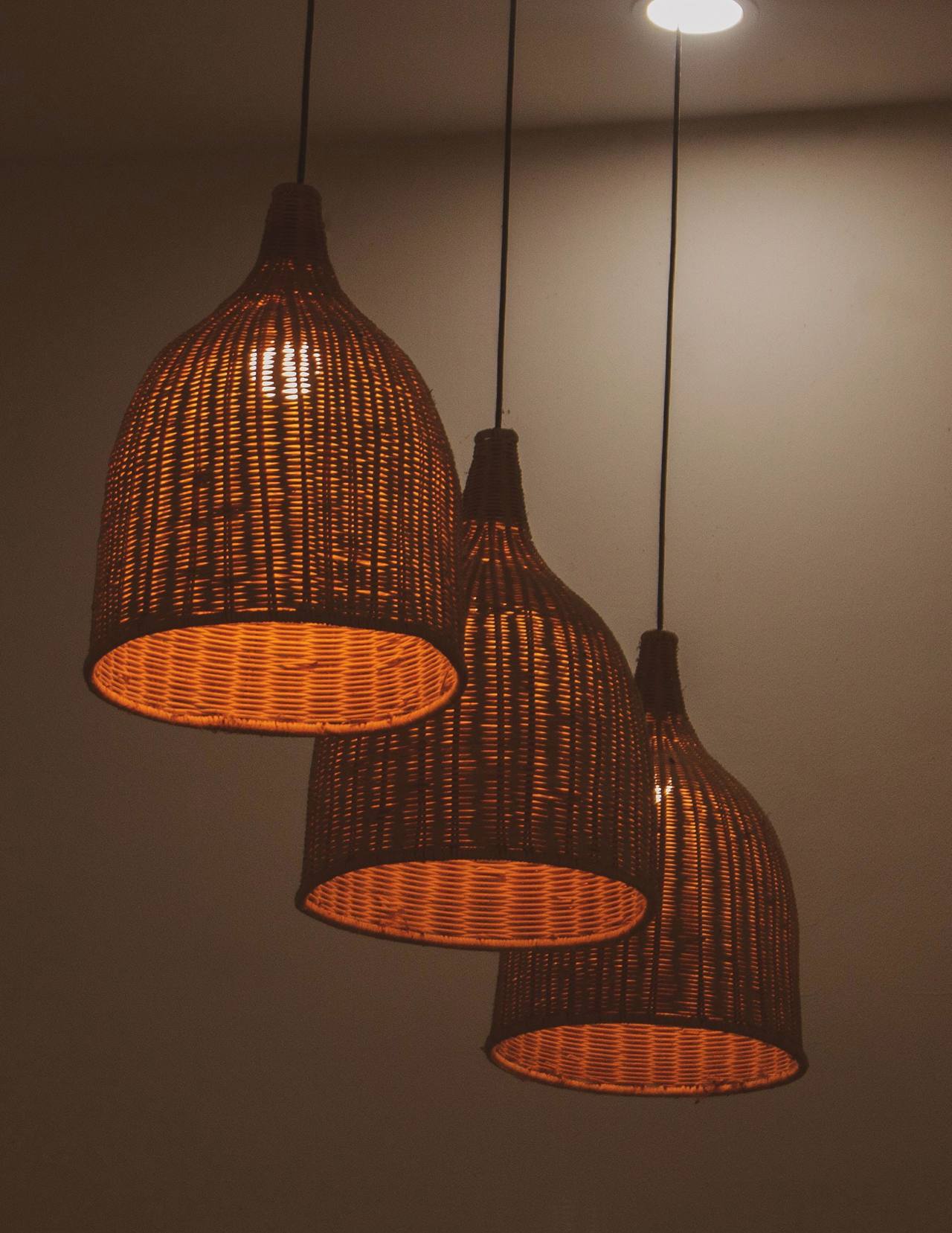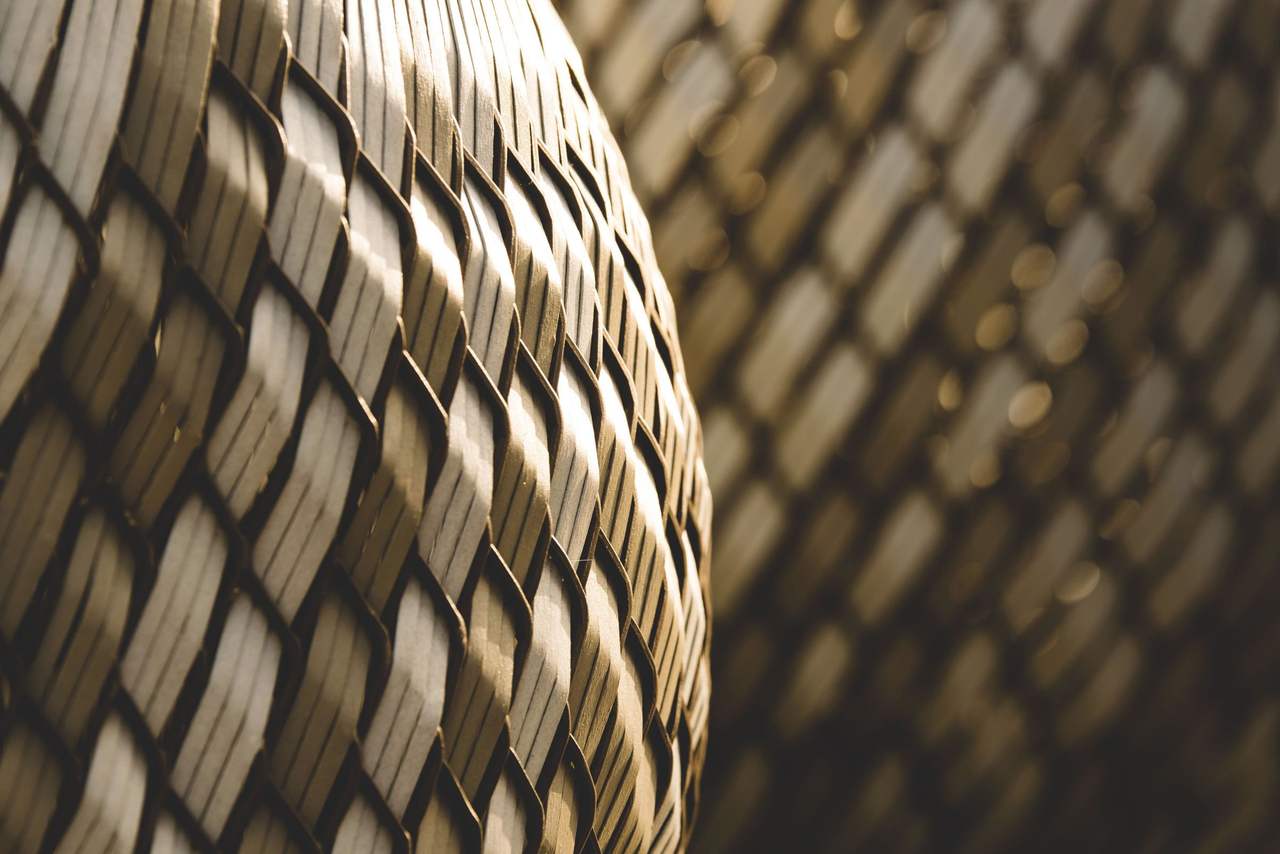
Rattan: an open weave that lets light out sideways
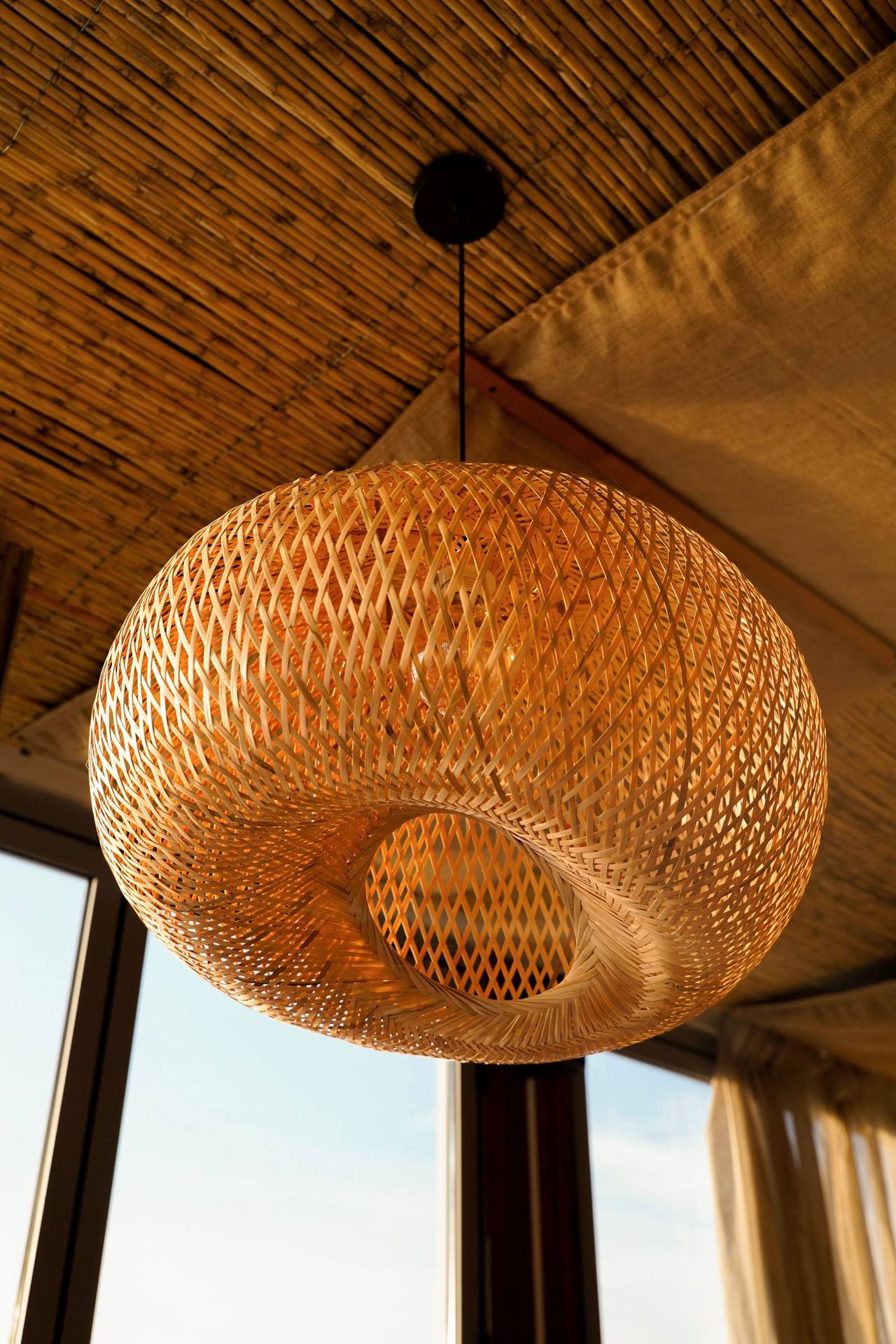
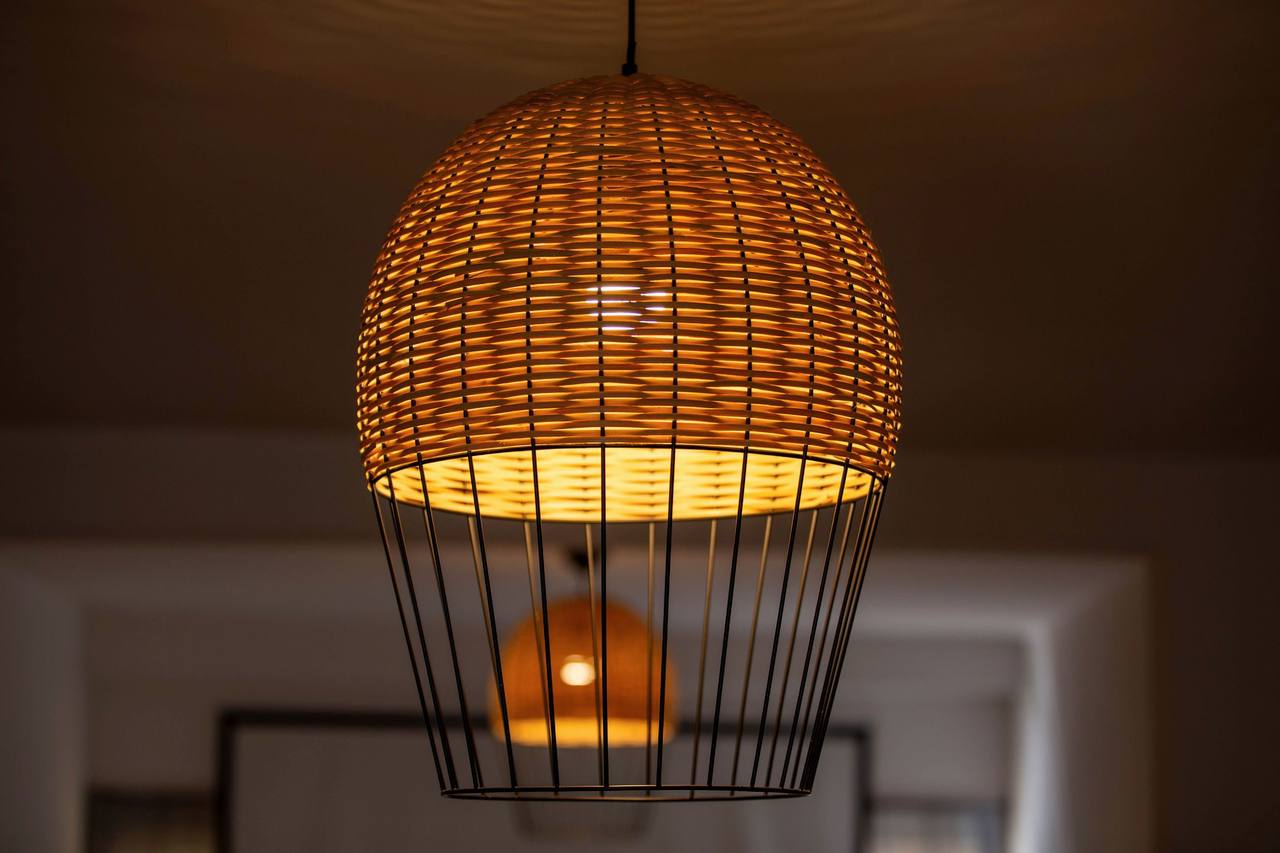
Rattan is pliable enough to weave open, so light escapes sideways through the shade and patterns the walls. Three of our lamps use rattan; two use seagrass, a fibre we weave much tighter.
- Woven by
- Huỳnh Thị Mến, on wooden moulds
- Time
- Two days for one 45 cm Hạ Chí shade
- Damp-proofing
- Water-based matte coat, applied after weaving
- Weaves
- Open (Hạ Chí), closed with an open band (Đông Chí), square (Xuân Phân)
- Never hang in
- Bathrooms, rain-exposed porches, next to a humidifier
- Warranty
- Frame and shade, 24 months
Rattan comes from the stem of the rattan plant. It bends when damp and stiffens as it dries, which is what lets us weave a round shade with even gaps, open or closed as the design needs. In a lamp, the gaps decide where the light goes.
How we weave it
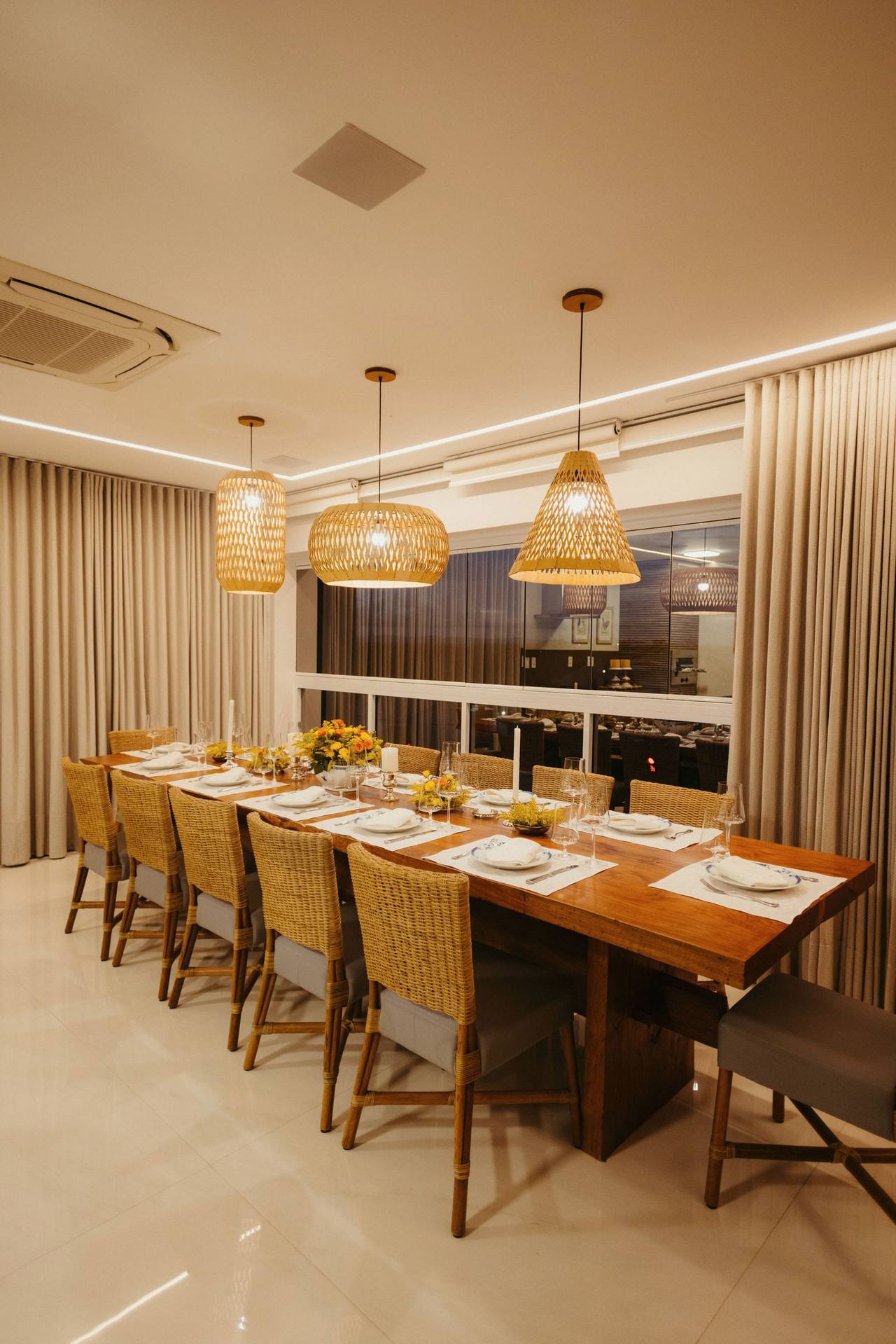
Huỳnh Thị Mến learned to weave from her mother. At the workshop she never weaves freehand: every design and every size has its own wooden mould. She dampens the strands so they bend, weaves them around the mould and leaves the shade to dry on it until it holds its shape. A 45 cm Hạ Chí shade takes her two days. The moulds are why the twelve Hạ Chí pendants at Thềm Chiều café read as one set, and why two Đông Chí lamps either side of a bed match.
Once woven, each shade gets a water-based matte coat. It adds no shine, barely changes the colour, and slows down how fast the fibre takes up moisture. It does not make rattan waterproof.
The shade is then fixed to a brass frame bent by Lâm Văn Lộc. You can read more about Mến on her maker page.
How light passes through
The same fibre, woven three ways, gives three kinds of light:
- Open weave (Hạ Chí): light slips out sideways and patterns the ceiling and any wall within about a metre. The table below gets direct light from the open base.
- Closed with one open band (Đông Chí): the closed part hides the bulb, and light leaves as a strip at eye level. No glare from the pillow.
- Square weave (Xuân Phân): the squares throw a grid of light onto the ceiling.
Pale walls make the pattern crisp; dark timber swallows it. The light mock-up draws this onto a photo of your own room.
Seagrass, the tight weave
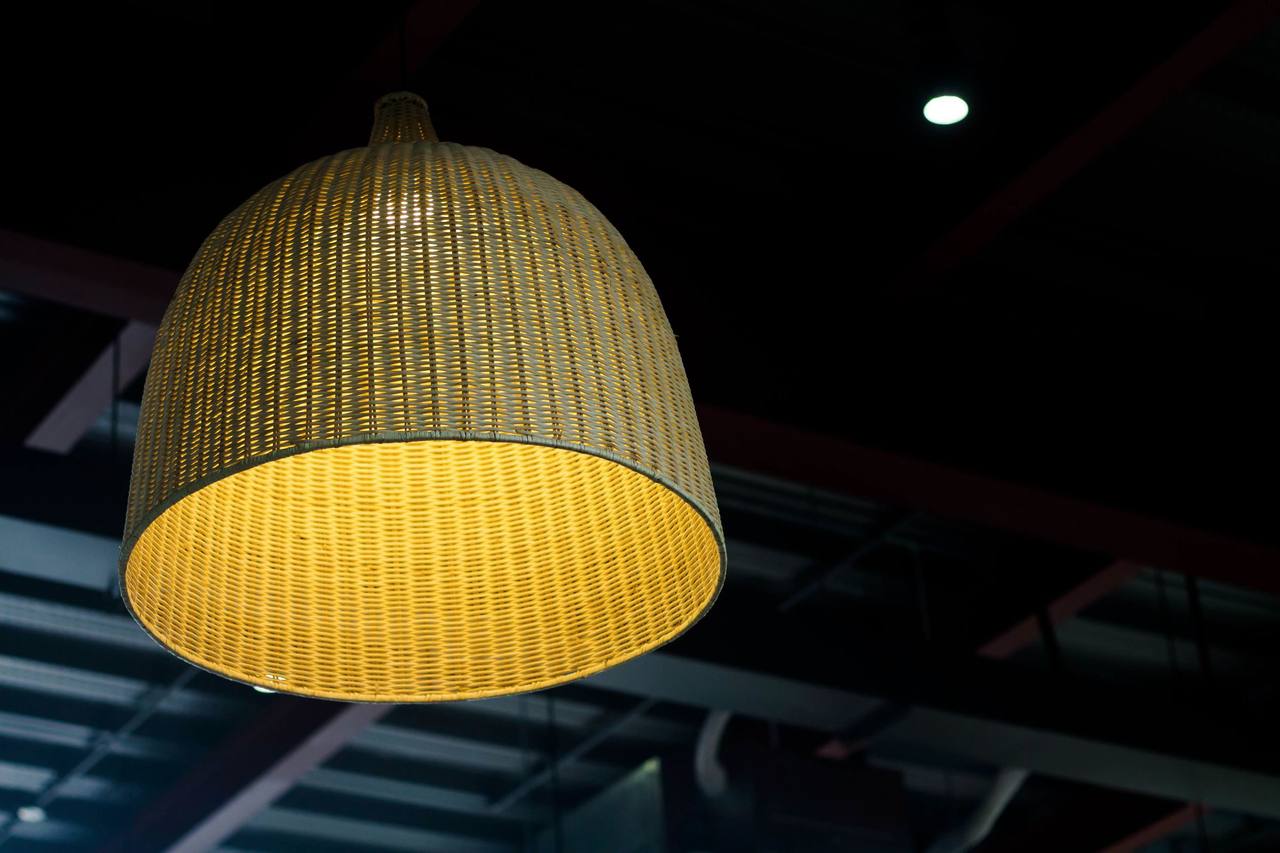
Lập Thu and Tiểu Mãn use seagrass (cói) instead. It is softer and flatter, and Mến packs it tight, so nearly all the light falls as one round pool under the lamp. Seagrass gets the same matte coat and the same care as rattan. Our guide to rattan pendant lights explains how rattan, seagrass and bamboo differ.
Rattan and Saigon’s humidity
Natural fibre takes moisture from the air. Saigon is humid all year and more so in the rainy season, so where you hang a rattan lamp matters more than how you clean it.
- Hang it in a room with air moving through it. Living and dining rooms and bedrooms with a window or air-conditioning are fine.
- Never in a bathroom, on a porch that catches rain, next to a humidifier or over a steaming pot.
- Once a month, dust it with a dry cloth or soft brush. No sprays, no damp cloths.
- If you see spots on the shade, send us a photo before you try anything. Tô Minh Khang will look and tell you what to do. Frame and shade carry a 24-month warranty; see care and warranty.
Our note on rattan in the rainy season goes further into mould. For a damper place than Saigon, see Nhà Chín Phòng in Đà Lạt: nine sealed rattan Đông Chí pendants, and no paper anywhere.
Bulbs
Rattan and seagrass shades only ever take LED bulbs. All our lamps use an E27 LED at 2700K, the yellow-white of an old incandescent, 6 W, with a spare in the box. When you replace one, buy the same type at any electrical shop and never fit an incandescent bulb.
To see which rattan shade suits your room, send a photo through the light mock-up page, or book a visit and hold one yourself.