Rattan lamps in the rainy season: preventing and treating mould
Why rattan takes on moisture, where not to hang it, monthly cleaning, and what to do if spots appear on the shade. What our warranty covers.
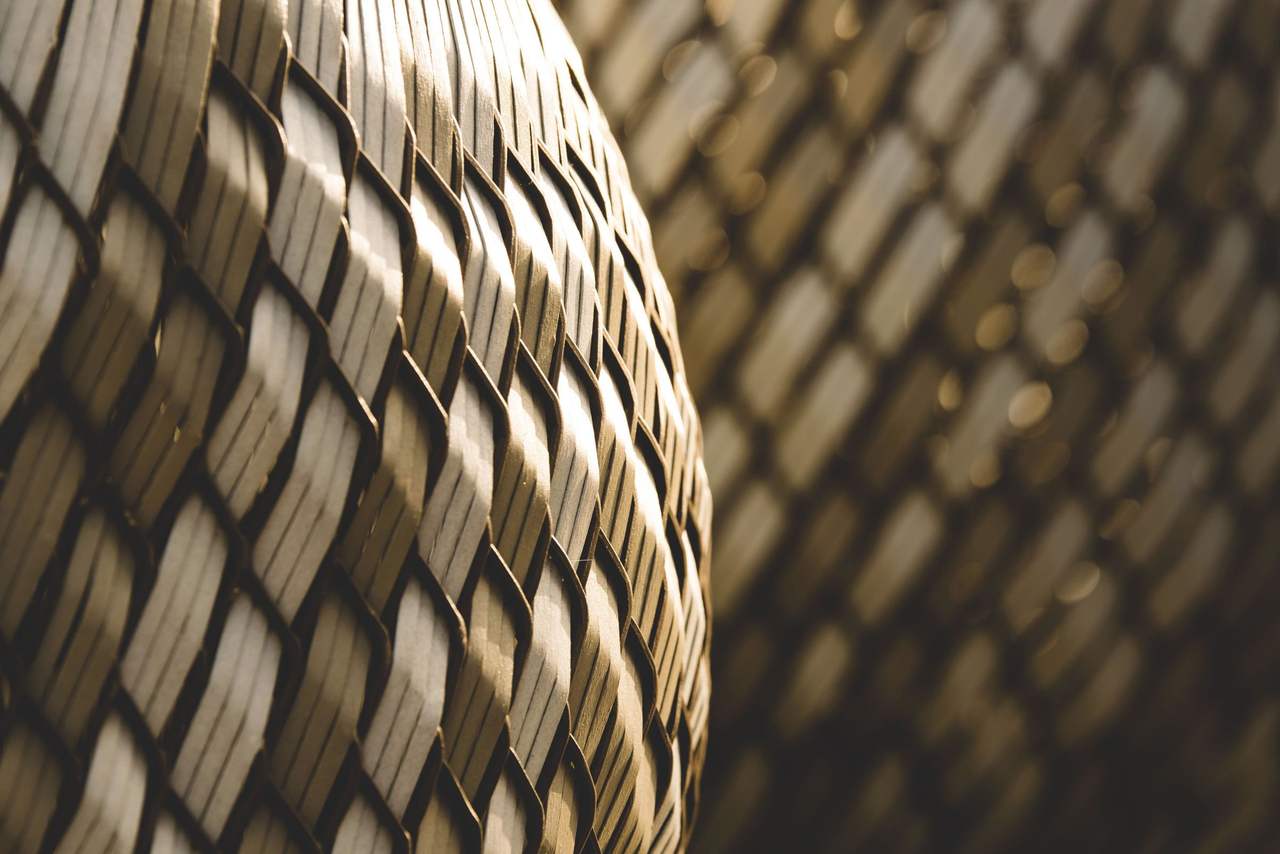
A rattan lamp goes mouldy when the shade stays damp for too long and never gets the chance to dry out. Prevention comes down to three things. Hang it in a ventilated room, never in a bathroom, on a rain-exposed balcony or next to a humidifier. Dust the shade once a month. And keep indoor humidity below 60%, the level the US Environmental Protection Agency (EPA) recommends to keep mould down. If spots have already appeared, take the shade down, brush it dry outdoors, wipe it lightly, dry it in the shade with a fan and watch it for a week. If the spots come back or have gone into the fibre, send us a photo.
I am Mến. I weave the shades and apply the moisture coat at our workshop in Saigon. This is how we get rattan through the wet months, and how we deal with it when a client sends a photo of a spotted shade.
Why rattan takes on moisture
Rattan and seagrass are dried plant stems. They still take up water vapour when the air is humid and give it back when it dries. You can feel it in your hands at the workshop: the same shade feels softer and heavier early on a rainy-season morning than at noon on a sunny day.
A few hours of damp followed by drying is harmless. Mould needs damp that lasts. The EPA’s guide puts it in one line: the key to mould control is moisture control. It recommends keeping indoor relative humidity below 60%, ideally between 30 and 50%.
Where not to hang a rattan lamp
| Spot | Why | Use instead |
|---|---|---|
| Bathroom | Steam every day, the shade never dries | A sealed, water-rated fitting |
| Balcony or porch in the rain | Rain hits the fibre directly | A proper outdoor light |
| Next to a humidifier or mister | Moist air blown at the shade all day | Move the machine away |
| Kitchen with no extractor | Steam and grease settle on the fibre | Hang it over the dining table instead |
| Closed storeroom | No air movement, damp collects | A room people live in, with a breeze |
Living rooms, bedrooms and corridors with a window or air conditioning are all fine. Rattan does not need a dry room the way dó paper does. It needs air.
How we prepare our shades
Every rattan and seagrass shade gets a matte moisture coat after weaving. It slows down how fast the fibre takes up water and makes dusting easier. It does not make the shade waterproof. Rain blowing onto it for days will still make it damp, and it can still go mouldy.
Khang leaves every lamp lit for 24 hours before packing. The bulb is a 2700K, 6 W LED, which gives off little heat, so we never count on the bulb to dry the shade.
For damp places we choose the material for the humidity first and the shape second. At Nhà Chín Phòng, a nine-room homestay in Đà Lạt (an illustrative project for a demo site; figures are made up), the nine bedside lamps are rattan Đông Chí (Winter Solstice) bells with the moisture coat, and no dó paper. See the Nhà Chín Phòng project.
Monthly cleaning
- Switch off and let the bulb cool.
- Brush off dust with a soft brush, along the fibres, inside and out.
- Wipe the brass frame and canopy with a dry cloth.
- No spraying, no soaking-wet cloths.
Dust holds moisture and gives mould something to grow on. A 45 cm Hạ Chí (Summer Solstice) takes about five minutes to do properly.
If the shade already has spots
Mould on rattan usually shows as grey-white or blue-black specks, often on the inside of the shade and where strands cross. This is what we do:
- Take the shade down and carry it somewhere airy, outdoors if you can, so spores do not spread through the room. Wear a mask.
- Brush it dry with a soft brush. Do not scrub hard enough to fray the fibre.
- Wipe lightly with a cloth wrung out almost dry in water with a little mild soap. The EPA’s advice for hard surfaces is to scrub mould off with detergent and water and dry completely. Rattan is a fibre, so we go gentler and use less water.
- Dry it in the shade with a fan blowing, until it feels as dry and light as before. We never put a shade in strong sun; fibre that dries too fast turns brittle and cracks.
- Watch it for a week. If the spots stay away, hang it again, somewhere airier.
If the spots come back, or have stained the fibre and made it soft, cleaning is no longer enough. The EPA also notes that porous, absorbent materials may have to be thrown away once mouldy, because mould gets deep inside. With our lamps it usually means a new shade; the brass frame carries on.
What our warranty covers
Frame and shade are covered for 24 months. Bulbs and cable follow the manufacturer’s warranty. If you see mould, send a photo of the whole shade and one of where it hangs, by Zalo or on 0900 000 002; Khang answers that phone. We look at the photos and tell you plainly whether the cause is our coating or the spot it hangs in, and what happens next. Details are on care and warranty.
Where people go wrong
- Rinsing the whole shade. Water soaks into the crossings, which dry last, and they become the next mouldy spot.
- Using bleach. We never use it on shades. It fades the fibre and leaves marks in the coating.
- Storing the shade in a plastic bag. It traps the damp. Store it in a cardboard box somewhere dry.
- Cleaning only the outside. Mould usually starts on the inside, where it is darker and the air moves less.
- Hanging it straight back in the same place. If that spot is the cause, the clean shade will go mouldy again.
Most of what you need to know about choosing and keeping rattan lamps is in our pillar guide, rattan pendant lights: what to look for and how to keep them. If you want to hang a lamp somewhere and are not sure it gets enough air, send a photo through the light mock-up page with a note on humidity or which way the breeze comes from. We reply within 48 hours, including whether rattan belongs there at all.
Sources and update
Keeping indoor humidity below 60%, ideally 30 to 50%; “the key to mold control is moisture control”; scrubbing mould off hard surfaces with detergent and water and drying completely; porous materials that may need to be thrown away: EPA, A Brief Guide to Mold, Moisture and Your Home. This is general advice for homes, not specific to rattan. The moisture coat, the cleaning routine and the steps for treating spots are our workshop practice. Last checked 4 October 2026.
Sources checked
Lamps in this article
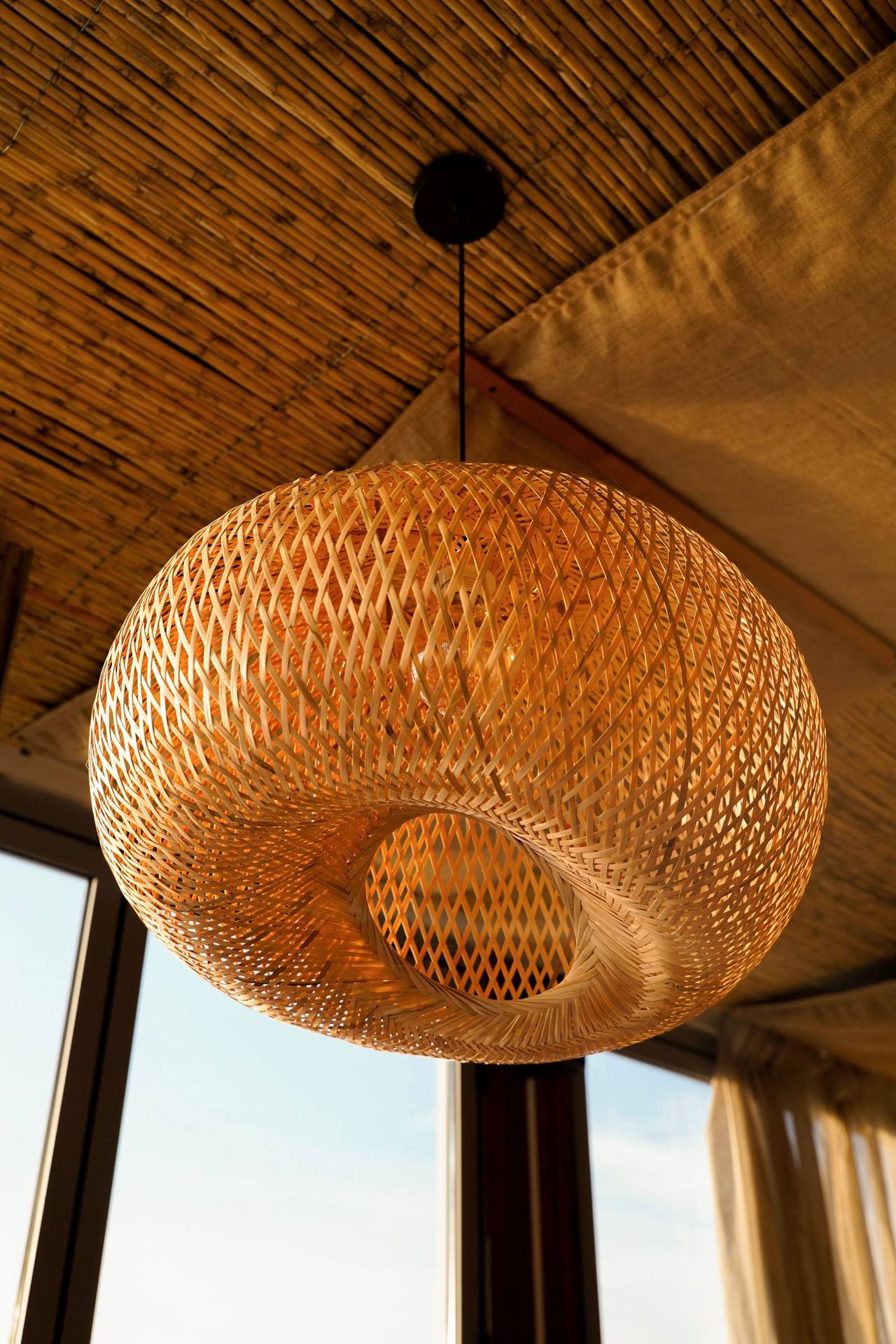


Read next
- Materials
Rattan pendant lights: what to look for and how to keep them
How to tell a carefully woven shade, how rattan, seagrass and bamboo differ, damp-proofing, cleaning, and why a rattan lamp does not belong in a bathroom.
- Cafés and stays
Choosing lamps for a homestay in a cold, damp town like Đà Lạt
Bedside lamps you can read by without glare when lying down, 4 W or 6 W bulbs, materials that tolerate damp, and how we crate and install from Saigon.
- Materials
Rattan, seagrass or bamboo: three fibres, three kinds of light
Rattan bends and can be woven open, so light escapes sideways. Seagrass weaves tight and sends light down. Bamboo is stiff and suits geometric shades.